Undergraduate · Electronics and Communication Engineering
The B.Tech Electronics & Communication Engineering programme provides a strong foundation in electronics, communication systems, embedded technologies, and modern engineering applications. Students gain practical experience through laboratories, projects, and industry-oriented training. The curriculum covers emerging areas such as IoT, VLSI, wireless communication, and automation technologies. Graduates are well prepared for careers in electronics, telecommunications, embedded systems, research, and advanced technology sectors.
Programme overview
A comprehensive engineering pathway designed for academic excellence and industry readiness.
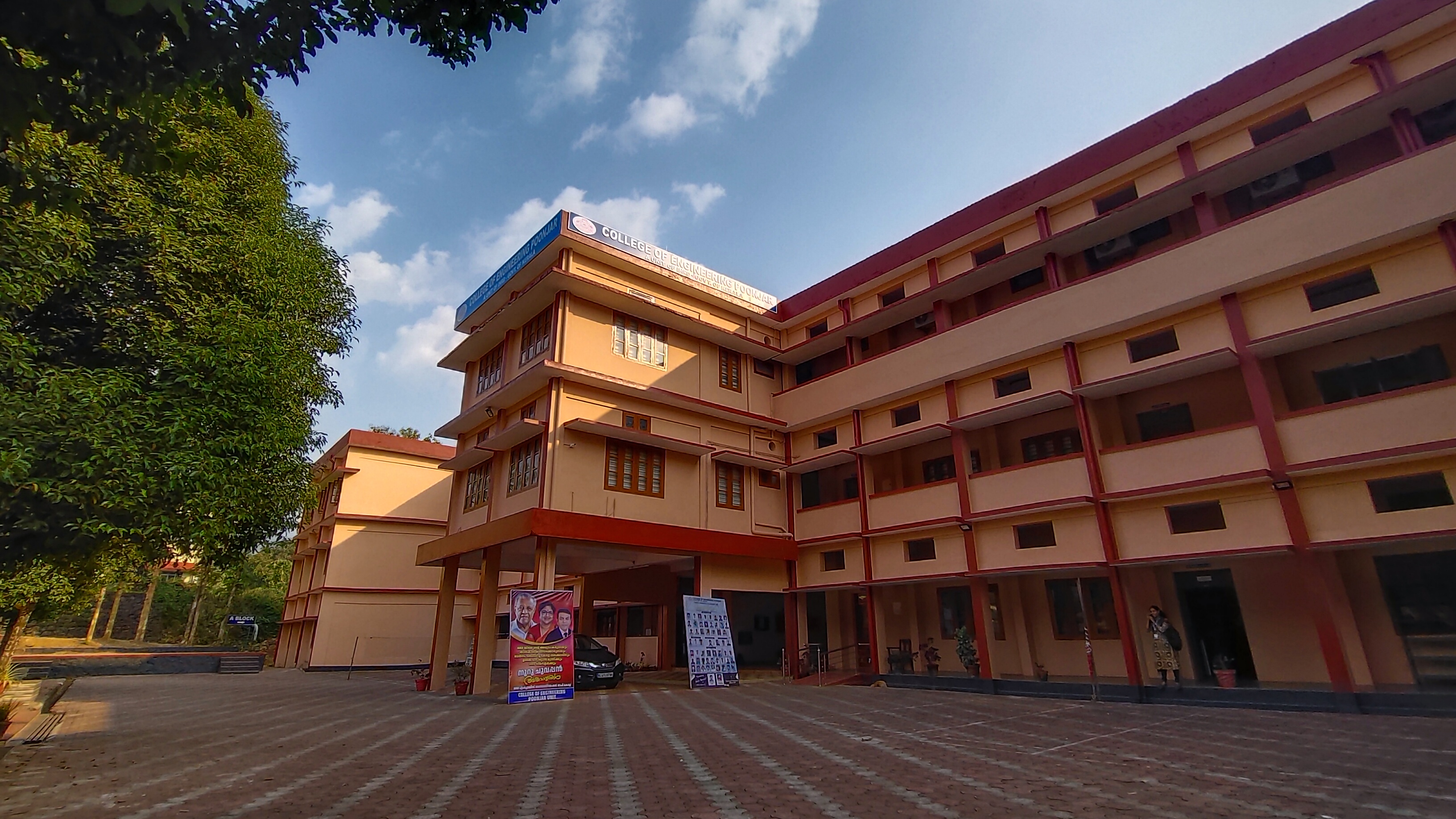
College of Engineering Poonjar offers full-time graduate courses of APJ Abdul Kalam Technological University (KTU), approved by AICTE. The institute is owned by the Government of Kerala and managed by the Institute of Human Resources Development (IHRD).
The B.Tech in Electronics & Communication Engineering (ECE) is a professional undergraduate programme that focuses on the study of electronic devices, communication technologies, embedded systems, and modern electronic applications. The course provides students with strong theoretical knowledge and practical skills in areas such as digital electronics, microprocessors, signal processing, wireless communication, VLSI design, IoT, and automation technologies. Through laboratory sessions, projects, workshops, and industry-oriented training, students gain hands-on experience and problem-solving abilities required in the modern electronics and communication industry. The programme also helps students develop innovation, technical expertise, teamwork, and professional skills, preparing them for careers in telecommunications, embedded systems, electronics manufacturing, automation, research, and higher studies in advanced technology fields.
Embedded Systems Engineer
VLSI Engineer
Communication Engineer
IoT Engineer
Robotics Engineer
Network Engineer
Curriculum
Core learning areas covered through the university-approved curriculum, laboratories, and project work.
Electronic devices, circuits, and linear integrated circuits
Digital electronics, microprocessors, and embedded systems
Analog and digital communication, signal processing
Electromagnetic theory, antennas, and wireless fundamentals
VLSI and system design concepts as per university syllabus
Careers
Graduates can pursue diverse roles across industry, research, and higher education.
Embedded Systems Engineer
VLSI Engineer
Communication Engineer
IoT Engineer
Robotics Engineer
Network Engineer
Why choose us
Study at College of Engineering Poonjar with the support of experienced faculty and a future-ready learning environment.
Programmes aligned with KTU standards and evolving industry requirements.
Dedicated faculty guiding students through theory, labs, and projects.
Exposure to projects, seminars, and innovation-driven learning activities.
Career guidance and placement assistance through the institution.
Encouragement for creative problem-solving and technical entrepreneurship.
Hands-on training in well-equipped labs and practical environments.
Admissions
Candidates who have passed Higher Secondary Examination, Kerala, or Examinations recognized as equivalent thereto, with Physics and Mathematics as compulsory subjects and Chemistry as one of the optional subjects with at least 45% marks put together in the above subjects are eligible for admission. In case, the candidate has not studied Chemistry, the marks obtained in Computer Science shall be considered. In case, the candidate has not studied Chemistry and Computer Science the marks obtained in Biotechnology shall be considered. In case, the candidate has not studied Chemistry, Computer Science and Biotechnology the marks obtained in Biology shall be considered. The marks as shown in the mark list of the Board of Examination obtained from the respective Higher Secondary Board shall be considered for academic eligibility.
Admissions
The following fee structure is applicable only for students admitted to the B.Tech programmes at College of Engineering Poonjar (CEP) for the Academic Year 2026–27.
| Fee Particular | Merit (Low Fee) | Merit (High Fee) |
|---|---|---|
| Admission Fee (1st Year Only) | ₹1,000 | ₹1,000 |
| Tuition Fee | ₹22,050 | ₹35,833 |
| ID Card | ₹150 | ₹150 |
| KTU Sports & Arts Fee | ₹530 | ₹530 |
| KTU Administration Fee (1st Year Only) | ₹1,050 | ₹1,050 |
| KTU Affiliation Fee (1st Year Only) | ₹790 | ₹790 |
| Caution Deposit (Refundable) | ₹5,000 | ₹5,000 |
| PTA Fund (One Time) | ₹10,000 | ₹10,000 |
| Bus Fund (One Time) | ₹2,500 | ₹2,500 |
| Training & Placement Cell (One Time) | ₹2,500 | ₹2,500 |
| Total | ₹45,570 | ₹59,353 |
Students admitted under the Merit category are required to remit the Tuition Fee at the beginning of the Second Semester.
Admissions
Candidates allotted to College of Engineering Poonjar through KEAM 2026 should bring the following documents for admission.
Allotment Memo of this Phase (3 Copies)
Receipt of Fee Remitted to CEE
KEAM Entrance Admit Card (3 Copies)
KEAM 2026 Data Sheet
SSLC / 10th Certificate (Proof of Date of Birth)
Plus Two Mark List (3 Copies)
Migration Certificate
If ApplicableTransfer Certificate (TC)
Conduct Certificate
Physical Fitness Certificate
Eligibility Certificate
If ApplicableCommunity Certificate (SC/ST/OEC/OBC(H))
Income Certificate (SC/ST/OEC/OBC(H))
Non-Creamy Layer Certificate (OBC)
Income & Assets Certificate (EWS)
Passport Size Photographs (2 Copies)
Aadhaar Card Copies (2 Copies)
Bank Passbook Copy
Admissions
Admission to 100% seats of the annual intake is made by Commissioner for Entrance examination (CEE), Government of Kerala from the rank list of Kerala Engineering Entrance examination conducted every year by Govt. of Kerala.
For details of Kerala Engineering Entrance examination and allotment, see the website: www.cee-kerala.org
For KEAM candidate portal, please visit: cee.kerala.gov.in
Analyse and design electronic and communication subsystems.
Use modern tools and simulation environments for engineering tasks.
Communicate technical ideas clearly in written and oral form.
Adapt to evolving standards and technologies in the ECE sector.
Faculty and department information: View department
Join a future-focused learning environment designed to prepare you for industry and innovation.